
Monday, January 10, 2011

Friday, January 7, 2011
10 forecasts for cosmetic surgery in 2011
This year will see even greater interest in cosmetic medicine than in the past, if doctors’ forecasts hold up. Plastic surgeons and dermatologists always predict booming business ahead, of course, but this time they may be right.
They’re expecting a comeback from the recent economic slump, which cut into patients’ ability, if not their interest, in getting cosmetic treatments, especially surgery. From 2008 to 2009, for example, the number of facelifts dropped 30 percent, while breast implant operations were down 12 percent and tummy tucks, 13 percent. Figures for 2010 are not yet available.
They’re expecting a comeback from the recent economic slump, which cut into patients’ ability, if not their interest, in getting cosmetic treatments, especially surgery. From 2008 to 2009, for example, the number of facelifts dropped 30 percent, while breast implant operations were down 12 percent and tummy tucks, 13 percent. Figures for 2010 are not yet available.
If consumer income economy rebounds, as many predict, cosmetic doctors’ offices are likely to fill up again.
SKIPPING THE SURGERY
In recent years, patients seeking to fight the signs of aging have been eagerly embracing alternatives to plastic surgery, and that trend is likely to continue.
Facelifts are down 40 percent in the past five years, while injections of fillers such as Juvederm, made by Irvine-based Allergan, are up 49 percent, according to surveys by the American Society for Aesthetic Plastic Surgery, or ASAPS, based in Garden Grove.
In the coming year, “demand for facelifts and other facial rejuvenation surgery will increase,” the ASAPS forecasts. That prediction is based on the shaky assumption that non-surgical alternatives haven’t permanently undercut the market for surgery.
“The trend toward more non-invasive plastic surgical procedures will continue,” says plastic surgeon Dr. Michael A. Persky of Encino. Among the examples he cites are long-lasting fillers such as Sculptra; medium-powered lasers such as Fraxel for skin care; and the newly approved Cool Sculpting device from Zeltiq, which uses cold temperature to shrink unwanted fat.

LOTS OF FAT FIGHTERS
“Non-surgical, non-invasive body contouring devices will continue to rule,” says says plastic surgery consultant Wendy Lewis.
FILLERS GALORE
The ASAPS doesn’t dismiss the work of plastic surgeons, but it makes a similar forecast: “The growth and popularity of cosmetic injectables (Botox, Dysport, Sculptra, Radiesse, Evolence, Juvederm, Restylane, Perlane etc.) will continue to increase as products continue to evolve and new players enter the market.”
YEAR OF THE CHEEKS
“I also predict that cheeks will become the ‘new lips,’ ” Klein says. “Women and also men are seeking a younger, fresher look that Botox can only provide a part of. I have seen an exponential growth in cheek plumping in my practice during 2010 and expect it to continue to grow as the baby boomers become educated about what is making them look older, and how to fix it.”
Actress Heather Locklear also may have had filler injected into her cheeks, according to Shafer. Many cosmetic doctors think actress Megan Fox has done so, and actress Raquel Welch apparently has too, says plastic surgeon Dr. Tony Youn. Klein believes that actresses Demi Moore and Madonna have also made their cheeks more prominent with injections.
BUTT ALSO
Many plastic surgeons also extract patients’ fat from the abdomen, then inject it to plump up other parts of the body.
“Fat transfers … to face, hands, buttocks and breasts will grow significantly in 2011,” predicts cosmetic surgeon Dr. Andre Berger of Beverly Hills.
Lewis expects that 2011 will produce more clarity. “New data will help cut through the confusion,” she predicts.
BETTER BOTOX
Some doctors foresee the introduction of more effective drugs similar to Botox.
Plastic surgeon Dr. Richard Fleming of Beverly Hills predicts that the wrinkle-smoothing effects of these products won’t fade after three-plus months, as Botox tends to do.
RECOVERING FROM WEIGHT LOSS
America’s battle with obesity could lead to more business for plastic surgeons.
The ASAPS agrees: “As our population increasingly realizes the dangers and health consequences of obesity, the number of patients seeking plastic surgery procedures for body contouring after dramatic weight loss (abdominoplasty, lower body lift, upper arm lift, etc.) will rise in 2011.”
HAIR AGAIN
Two experts foresee an expansion in hair restoration procedures.
“The Neograft system of automated hair grafting is a significant development because it opens up hair transplantation to many more clinics and consumers,” Lewis says.
A year ago, a new variety of breast implants called “gummy bear” implants seemed close to approval by the Food and Drug Administration. Now that seems less likely, Lewis says.
“As the economy continues to improve, people will return,” says plastic surgeon Dr. David Shafer of New York.That’s just one of many trends to look for this year:
SKIPPING THE SURGERY
In recent years, patients seeking to fight the signs of aging have been eagerly embracing alternatives to plastic surgery, and that trend is likely to continue.
Facelifts are down 40 percent in the past five years, while injections of fillers such as Juvederm, made by Irvine-based Allergan, are up 49 percent, according to surveys by the American Society for Aesthetic Plastic Surgery, or ASAPS, based in Garden Grove.
In the coming year, “demand for facelifts and other facial rejuvenation surgery will increase,” the ASAPS forecasts. That prediction is based on the shaky assumption that non-surgical alternatives haven’t permanently undercut the market for surgery.
“The trend toward more non-invasive plastic surgical procedures will continue,” says plastic surgeon Dr. Michael A. Persky of Encino. Among the examples he cites are long-lasting fillers such as Sculptra; medium-powered lasers such as Fraxel for skin care; and the newly approved Cool Sculpting device from Zeltiq, which uses cold temperature to shrink unwanted fat.
“There will continue to be an increase in non-surgical procedures which will fill, tighten and uplift skin,” predicts plastic surgeon Dr. Ed Domanskis of Newport Beach, although he foresees a return of surgical patients too. He also expects patients will want doctors use new skin-tightening devices in parts of the body that currently a seldom treated.“We will extend their use to different parts of the body, like the knees as well as excess skin over the elbows,” he says.
“Non-surgical, non-invasive body contouring devices will continue to rule,” says says plastic surgery consultant Wendy Lewis.
“Zeltiq Coolsculpting was the most significant FDA approval in this space of 2010, marking the first scientifically proven non-invasive fat reduction treatment, and there are more systems to come. More variations on [radio frequency]-, heat- and light-based energy for fat melting and skin tightening are on the horizon.”An injectable fat-fighting drug is also possible this year, she says.
“If Kythera gets FDA approval for its fat-dissolving drug based on phosphatidylcholine in 2011 or 2012, it has the potential to revolutionize the body-contouring market by providing a clinically proven injectable solution to localized fat deposits,” Lewis says.Plastic surgeon Dr. John Di Saia of San Clemente and Orange predicts that patients will remain fascinated with new fat-fighting technologies, but he is skeptical about the results.
“Gimmicks in medicine and less invasive technologies will continue to attain public attention in 2011. Zeltiq, for example, will likely have a period of popularity, but then ‘cool off’ as actual results temper consumer decision making,” he says.“This is the pattern seen with new technology for ‘fat fighters’ over the past decade. No new technology has commanded the market for long and there have been several in the last decade or so. We have had ultrasound-assisted liposuction, power-assisted liposuction, laser-assisted liposuction, injectable ‘fat dissolvers,’ and multiple marketing-assisted variations on these themes. Consumers continue to be wowed by marketing and frequently do not investigate before they partake. ” Di Saia says.
FILLERS GALORE
“My 2011 forecast definitely includes fillers, such as Juvederm, Radiesse and Artefill, becoming more and more popular,” says dermatologist Dr. Lorrie Klein of Laguna Niguel. “I predict they collectively will become as popular as Botox, as more and more aging baby boomers see their faces ‘sinking’ and also realize that filler treatments, if done expertly, can rejuvenate the face as well or better than a surgical facelift.”That forecast assumes a big leap in popularity for various fillers, which totaled about 1.6 million procedures in 2009, compared to 2.6 million for injections of Allergan’s Botox and similar wrinkle-fighting drugs.
The ASAPS doesn’t dismiss the work of plastic surgeons, but it makes a similar forecast: “The growth and popularity of cosmetic injectables (Botox, Dysport, Sculptra, Radiesse, Evolence, Juvederm, Restylane, Perlane etc.) will continue to increase as products continue to evolve and new players enter the market.”
“I also predict that cheeks will become the ‘new lips,’ ” Klein says. “Women and also men are seeking a younger, fresher look that Botox can only provide a part of. I have seen an exponential growth in cheek plumping in my practice during 2010 and expect it to continue to grow as the baby boomers become educated about what is making them look older, and how to fix it.”
“It’s not about just filling in wrinkles anymore, it’s about ‘re-inflating’ the cheeks, chin, temples and other facial areas that are no longer smooth or rounded,” she says.Reality TV star Heidi Montag is one of many stars who has had fat injections to plump up her cheeks, although few admit it, as Montag does.
Actress Heather Locklear also may have had filler injected into her cheeks, according to Shafer. Many cosmetic doctors think actress Megan Fox has done so, and actress Raquel Welch apparently has too, says plastic surgeon Dr. Tony Youn. Klein believes that actresses Demi Moore and Madonna have also made their cheeks more prominent with injections.
“Celebrities like Kim Kardashian, Beyonce, and Jennifer Lopez have made a shapely rear-end a must have accessory,” says the ASAPS. “In the coming year patients will be seeking posterior body lifts, buttock lifts, surgical and nonsurgical buttock augmentations to shape and augment their buttocks.”FAT IS YOUR FRIEND
Many plastic surgeons also extract patients’ fat from the abdomen, then inject it to plump up other parts of the body.
“Fat transfers … to face, hands, buttocks and breasts will grow significantly in 2011,” predicts cosmetic surgeon Dr. Andre Berger of Beverly Hills.
“Fat grafting will continue to improve and become more defined, detailed,” and be used in more parts of the body, says plastic surgeon Dr. Ashkan Ghavami of Beverly Hills. “I have seen a huge increase and demand for buttock fat transfer and this will continue to trend upward.”Such fat transfers, particularly with technologies that concentrate the fat’s stem-cell content, are a hot topic. “hot,” Lewis says, but independent medical researchers haven’t yet figured out the degree to which those techniques are actually effective or whether they’re just a hot marketing phenomenon.
Lewis expects that 2011 will produce more clarity. “New data will help cut through the confusion,” she predicts.
BETTER BOTOX
Some doctors foresee the introduction of more effective drugs similar to Botox.
Plastic surgeon Dr. Richard Fleming of Beverly Hills predicts that the wrinkle-smoothing effects of these products won’t fade after three-plus months, as Botox tends to do.
Domanskis goes further. “A Botox product will be developed that will last longer and even be a cream type that will penetrate the skin and not require an injection,” he says.His forecast of a Botox-like cream has a basis in fact, but Domanskis may be overly optimistic about the timing. Revance Therapeutics, based in Mountain View, Calif., says clinical trials of its no-needle Botox-like lotion will be done in 2012.
RECOVERING FROM WEIGHT LOSS
America’s battle with obesity could lead to more business for plastic surgeons.
“The number of patients seeking bariatric surgery will continue to skyrocket. There were approximately 200,000 gastric bypass procedures performed just this past year. There are about 5,000 plastic surgeons. If even a small fraction of these patients who have lost massive amounts of weight undergo cosmetic procedures to remove the hanging, excess skin, their numbers will overwhelm plastic surgeon’s capabilities!” Domanskis says.
HAIR AGAIN
Two experts foresee an expansion in hair restoration procedures.
“The Neograft system of automated hair grafting is a significant development because it opens up hair transplantation to many more clinics and consumers,” Lewis says.
Hair-transplant specialist Dr. Alan J. Bauman of Boca Raton, Fla., says, “Less invasive hair transplant procedures using advanced devices (like NeoGraft) that help the surgeon efficiently transplant healthy follicles with no linear scar will continue be a top area for R&D over the next few years.”But he also foresees an expansion of hair-loss treatments: “compounded ‘designer’ minoxidil (like Formula 82M), at-home laser treatments (LaserCaps and handhelds), in addition to new diagnostic tests and tools like hair loss genetic testing and the HairCheck trichometer.”WHAT NOT TO EXPECT
A year ago, a new variety of breast implants called “gummy bear” implants seemed close to approval by the Food and Drug Administration. Now that seems less likely, Lewis says.
“No one is even talking about gummy bear implants coming in the U.S. anymore, since the regulatory process has virtually crippled the industry from launching new products,” she says.resource: The Orange County Register
Thursday, October 21, 2010
Botox – More than an Anti-Aging Treatment
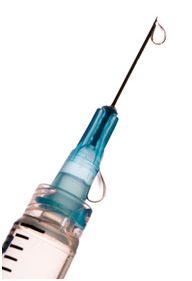
This discovery of the Botox injection, as an anti-aging treatment, revolutionized the cosmetic surgery and plastic surgery world. Since then, there have been a number of other comparative treatments including Collagen injections, developed however Botox injections still remain the most popular treatment due to its non-permanency and cost effectiveness.
The Botox treatment however is not just for a pretty face, although it has built its reputation through the successful treatment of forehead wrinkles, eye wrinkles and lines in cosmetic surgery for thousands of men and women€“ it also has many other uses in the cosmetic market. Some of these include injection into the balls of the feet.

Another condition that benefits from Botox injections are headaches and migraines. Much of this pain is caused by muscle spasm and over tight muscles. Botox treatment can stop these conditions from occurring.
Hyperhydrosis is when someone has uncontrolled sweating and botox can stop it. Botox injected into the correct sweat glands, can stop this embarrassing affliction – the rise in this treatment is meteoric. Cade Witnish, M.D. of Harlequin Medical, a Cosmetic Surgery Clinic in London, says Botox injections for hyperhydrosis treatment has increased in the plastic surgery market by 400% in the last year.
Botox remains the number one treatment in the cosmetic surgery industry. Botox anti-aging still remains number one, but other botox treatment such as in cosmetic surgery for men, migraine, high heels (balls of feet) and other botox cosmetic treatments are growing faster.
So there you have it, Botox is not just for anti-aging, but for all other cosmetic surgery treatment purposes as a cure all. It has been a long reign at the top of the plastic surgery world, but I don'€™t think this anti-aging super heavyweight is going anywhere soon. Many have tried and failed and it will be interesting to see what product will be the next contender to try and take the place of botox injection as the king of cosmetic surgery jungle.
resource: World news
Thursday, September 16, 2010
FDA Approves Weight Loss Methods Zeltiq and Zerona

If you can't diet or exercise it off, you can now try to freeze or zap it off. The Food and Drug Administration gave the green light for new weight loss treatments: one that freezes fat cells and another that uses a low-energy laser to shrink them.
For those that have a few annoying extra pounds or a bit of a bulge in all the wrong places, Zeltiq, may be the answer. Cleared last week by the FDA as a body contouring treatment, it uses a gel patch attached to a machine that freezes unwanted fat cells, causing them to self-destruct and get re-absorbed into the body over several months.
On the market for about a year, the drug was originally approved by the FDA to anesthetize and cool the skin before dermatology procedures. But doctors found that the device worked in the battle of the bulge as well.
"This is a big deal," plastic surgeon Lawrence Bass told "Good Morning America."
"It's the first time the FDA has cleared a non-invasive fat-reduction technology."
Former dancer and avid exerciser Lisa Pittonyak was a Zeltiq customer eight months ago to combat "my lower abdomen little pouch that I have."
"It's always bugged me, my whole life," she said. "At first it was a strange pulling feeling, a little painful," she said. "And after about five or 10 minutes, you basically get numb."
Although she's only lost about half an inch, she said she feels better about her body and that the $1,500 price was worth it.
"Bathing suit, summer time, the jeans, wearing tighter clothing," she said, ticking off the reasons how Zeltiq worked for her. "And not feeling like I have that little bulge."

Zeltiq, approved recently by the Food and Drug Administration as a weight-loss treatment, uses a gel patch and a machine that freezes unwanted fat cells, causing them to self-destruct and then re-absorb into the body over several months.
(ABC News)New Fat-Fighting Treatments Hitting the Market
In addition to Zeltiq, the FDA also cleared another weight-loss method called Zerona, which aims a low-energy laser at troublesome areas, forcing the fat cells to empty in a matter of weeks."They certainly don't replace diet and exercise," Bass said, "but they're another option for a subset of patients that just need to take a little bit off."The FDA clearance can mean a bonanza for marketers who can use that for pronouncement in advertising. The fat-freezing device has been used "off label" for fat-busting. It's manufacturers have solid scientific evidence to support its effectiveness in freezing on average 22 percent of the fat layer reduction. It's mostly for people of normal body weight with just a few nagging trouble spots.
The laser device, in contrast, is the first of its kind to receive FDA clearance which means, while safe, the body of scientific evidence is less robust and less well-documented. But unlike liposuction, these treatments are non-invasive, meaning there's virtually no down time and very little physical risks.
The laser device, in contrast, is the first of its kind to receive FDA clearance which means, while safe, the body of scientific evidence is less robust and less well-documented. But unlike liposuction, these treatments are non-invasive, meaning there's virtually no down time and very little physical risks.
New weight-loss treatments are always sought as more and more Americans struggle with expanding waistlines.
The FDA is also expected to review a weight-loss pill known as Contrave in December. The drug shows promise: Researchers found that clinical trial participants began losing weight four weeks after starting the drug regimen and lost an average of 6.1 percent of their body fat after more than a year of treatment.
But, so far, none of the weight-loss treatments seems to be magic pill. Some have embarrassing gastrointestinal side effects and doctors have continuously stressed that pills and lasers are never meant to replace old-fashioned diet and exercise.
resource: http://abcnews.go.com/Health/freezing-fat-fda-green-lights-weight-loss-treatment/story?id=11641994&page=2
Thursday, July 15, 2010
Cosmetic Surgery for Women: Who do you go to for vaginal mole removal?
Moles are natural growths seen on every human skin although there are people who would prefer getting rid of it through any natural or clinical way because of how it appears on the skin. My advise is to see a qualified dermatologist, gynecologist or cosmetic surgeon to remove a vaginal mole or any mole. There are at least three acceptable methods of removing moles namely - shaving or full excision, laser surgery, and electrocautery.
 Shaving or full excision
Shaving is a procedure that needs the mole and the surrounding skin to be surgically removed through anesthetic injection. Anesthesia tends to numb the site for surgery and render the mole to be raised at a level that will make it easier for the surgeon to remove it. Once the anesthesia is already making its mark by making the skin feel no pain, a scalpel will be used to slice off the mole and a bit of tissues surrounding it. Once it is sliced off, the wound will be cauterized to prevent bleeding from continuing.
On the other hand, full excision is excising the growth and adjacent tissues including portions of subcutaneous tissues underneath it. Edges of the skin are stitched together so that tissues will be given time to naturally attached themselves and heal. This kind of technique will leave the incision line which the surgeon tries to minimize.
These two kinds of methods for removal can leave hidden cells underneath the skin that may result to another skin growth of the mole on the same spot where it was excised. For patients who have fear in the sight of bleeding or low pain tolerance, this kind of procedure is not that suitable.
Laser Surgery
This procedure is considered as one of the cleanest and most sophisticated work of clinical art although, this is also one of the most expensive and selective processes that one can opt to choose. Selective in a way that only flat growth is allowed to utilize this kind of procedure. For growths which are raised, it is quite impossible to go with this procedure because the light waves that are released from the laser won’t be able to penetrate deep into the skin tissue to pronounce a satisfactory job. For the procedure to be considered as successful, it must not leave any kind of mark or scar on the skin. This will depend on the person’s skin qualification to produce the good results.
Electrocautery
This is more advisable for skin tags and warts but is not commonly advised to mole removal although it might work by using heat in order to burn the mole from the skin. This is not a popular method because of the painful effects on the skin and forms of scarring to the skin. Several treatments are needed to finally remove the mole and not just through electrocautery.

Shaving is a procedure that needs the mole and the surrounding skin to be surgically removed through anesthetic injection. Anesthesia tends to numb the site for surgery and render the mole to be raised at a level that will make it easier for the surgeon to remove it. Once the anesthesia is already making its mark by making the skin feel no pain, a scalpel will be used to slice off the mole and a bit of tissues surrounding it. Once it is sliced off, the wound will be cauterized to prevent bleeding from continuing.
On the other hand, full excision is excising the growth and adjacent tissues including portions of subcutaneous tissues underneath it. Edges of the skin are stitched together so that tissues will be given time to naturally attached themselves and heal. This kind of technique will leave the incision line which the surgeon tries to minimize.
These two kinds of methods for removal can leave hidden cells underneath the skin that may result to another skin growth of the mole on the same spot where it was excised. For patients who have fear in the sight of bleeding or low pain tolerance, this kind of procedure is not that suitable.
Laser Surgery
This procedure is considered as one of the cleanest and most sophisticated work of clinical art although, this is also one of the most expensive and selective processes that one can opt to choose. Selective in a way that only flat growth is allowed to utilize this kind of procedure. For growths which are raised, it is quite impossible to go with this procedure because the light waves that are released from the laser won’t be able to penetrate deep into the skin tissue to pronounce a satisfactory job. For the procedure to be considered as successful, it must not leave any kind of mark or scar on the skin. This will depend on the person’s skin qualification to produce the good results.
Electrocautery
This is more advisable for skin tags and warts but is not commonly advised to mole removal although it might work by using heat in order to burn the mole from the skin. This is not a popular method because of the painful effects on the skin and forms of scarring to the skin. Several treatments are needed to finally remove the mole and not just through electrocautery.
Friday, July 2, 2010
12 Crazy Types of Cosmetic Surgery

Botox, dermal fillers, breast implants and liposuction are bread-and-butter cosmetic procedures for plastic surgeons and dermatologists, but sometimes patients demand much, much more.
For example, dimple surgery, cankle liposuction, and collagen injections into the feet to make high heels less painful.
The Daily Beast online news site has assembled a slide show featuring 12 such varieties of cosmetic procedures that it labels “ridiculous,” including some that don’t deserve that label.
Local cosmetic doctors know of them, but don’t have much good to say about them. Here’s a rundown:
RISKY
Dimpleplasty. Wish you had dimples like Colin Firth or Jennifer Garner? It’s doable, but risky in the long-term.
“I’ve done a few for the cheeks, and they work reasonably well,” says plastic surgeon Dr. Val Lambros of Newport Beach. “I have concerns about how the dimple looks in 10 15 years. A dimple turns into a crease with time. A dimple arguably looks good. A crease does not.”
Plastic surgeon Dr. John Di Saia of San Clemente and Anaheim agrees. “This is risky and unreliable — how it might turn out is less than predictable. It is not a common request either.”
Chin cleft surgery. This procedure, like a dimpleplasty, is “fraught with problems,” says plastic surgeon Dr. Edward Domanskis of Newport Beach. “One needs only look at Michael Jackson, trying to look past his nose, to his chin. Unfortunately, the results of trying to create a chin cleft/dimple result in a totally unnatural appearance, primarily due to the dynamic muscular forces in those areas. If a patient wants to draw attention to herself/himself, then this is a good procedure!”
Lambros is less worried about the procedure. “It’s a look. It can be done and some people like it,” he says.
Abdominal etching. The idea of tailoring your fat to look like muscle seems outrageously wrong-headed, but this operation is growing in popularity among men. They turn to VASER devices and others to “sculpt grooves in layers of fat to suggest a muscular appearance,” in the words of Daily Beast.
Plastic surgeon Dr. Marcel Daniels of Long Beach says, “Nineteen years of private practice has taught me that there are very few shortcuts in life and abdominal etching isn’t one of them. To create the
illusion of musculature, lines of scar are created on the underside of the skin with the intervening fat now looking like bulging muscles. Sounds good so far! If the patient gains any weight (and most of us do as we get older) the bulges can stop looking like muscle and look just plain bizarre! Buyer beware!”
Lambros agrees: “When you take down the fat so much, the abdomen has the possibility of looking funny with time. My concern isn’t for the young guy. It’s for when that young guy is 50 and puts on 20 pounds and his skin isn’t so good. He will put on fat where there is fat and he will not where the fat has been taken away. Might look very odd. Plastic surgeons, like patients, tend to live for the moment.”
Domanskis says, “Most patients want as much definition as possible but the risks of complications like scarring, unevenness, are very real no matter what type of liposuction is used. This is where the plastic surgeon’s experience as to how much fat under the skin can be removed safely without causing problems is extremely important.”
LESS RISKY
Cankle liposuction. For an estimated price of $5,000 to $8,000, it’s possible to have the fat sucked out of chubby ankles, known as “cankles.”
“It has been considered dangerous,” warns Di Saia. Other doctors aren’t so worried.
“It’s just liposuction and this has a long tradition in lipo surgery,” Lambros says.
“This is not that unusual,” says Domanskis. “A patient requesting a reduction in the size of her calves with liposuction may also have unwanted fat accumulation around her ankles. Liposuction can remove this also, primarily on either side of the ankle, through a single extremely small cut. The amount of fat removed is usually quite small. … The final appearance in the ankle and calf area is usually not seen for at least six months because of prolonged swelling.”
Patients might be disappointed with the results, warns Daniels.
“The shape of a woman’s ankle is only partially dependent on fat in the area. The rest is due to bone structure, which can’t be ‘fixed,’ so removing fat from the area may result in a significantly more modest degree of improvement than the patient may hope for. Also since the liposuction is done so far away from the heart, swelling in the feet may take several weeks or even months to resolve,” he says.
NOT REALLY COSMETIC PROCEDURES Eyebrow and eyelash transplants.

Domanskis explains, “Eyebrow and eyelash enhancement with Latisse may not be enough when the patient has suffered a burn of the area. That is when either a narrow strip of hair bearing skin or micrografts are used to reconstruct the burned eyebrow and/or eyelash.”
Dr. Christopher Zachary, chairman of the UCI Department of Dermatology, agrees.
“Facial disfigurement comes in many forms, and so loss of eyebrow hair can be a source of chronic concern, embarassment and social stigmatization in patients who have suffered from trauma, burns, and various medical conditions. Eyebrow transplantation is a most appropriate and ethical procedure, though it is difficult to achieve an optimal esthetic outcome,” he says.
Iris implants. At a price of $5,000 or more, this operation is really for people whose eyes have been damaged, not for those who wish their eye color were different.
“I wouldn’t want my irises messed with no-how,” Lambros says.
IF IT BOTHERS YOU …
Toe shortening. The estimated price is $2,000 if you think that one toe is too long, or $10,000 for a “complete foot makeover.”
“I’ve never heard of it,” says both Di Saia and Lambros.
“I have never had a patient request this,” says Domanskis. “However, different length adjustments of the hands and/or toes could be indicated for various congenital malformations of these areas to gain more symmetry and deflect attention to the deformity. ”
Belly button surgery. The price of turning an innie into an outie, or vice versa, is as much as $4,000, according to the Daily Beast.
Lambros is dubious. “That sounds like a lot to me for a simple operation,” he says.
Di Saia performs this procedure only during a tummy tuck.
Domanskis is sympathetic about why a woman would want this work done.
“Unfortunately, after pregnancy, the mother’s body does change in appearance, primarily the breasts and abdomen with its belly button. It is perfectly reasonable to try and recapture what one has lost,” he says. “Reshaping the belly button is one part of a tummy tuck but can be done as a separate procedure.”
SO SILLY
Toddler teeth whitening. Did anyone other than Britney Spears ever want this?
“This belongs to the extremely small minority that want their pet’s teeth white also,” says Domanskis.
THE PRICE OF FASHION
Collagen feet fillers. For an estimated price of $225, you can get injections of collagen to cushion yourself against the pains of high heels.
“I have read about it but not had a request,” says Di Saia. “It’s kind of silly as it would need to be repeated frequently.” Just like Botox, doc.
“I really am amazed how women can walk around with those high heels. The cost of reducing any discomfort is a bargain compared to the cost of the shoes,” says Domanskis.
CROSS-CULTURAL
Pubic hair transplant. This is supposedly an Asian phenomenon.
“Every subset of the population and every individual has their conception of beauty, which is somewhat dictated by fashion and cultures,” says Domanskis. “Everyone would agree that it is preferable that one accept their own appearance without alterations but at least plastic surgery is available to help.”
“People have said my beard looks pubic,”: says Lambros. “That’s why I shave.”
Di Saia adds, “It seems most are shaving most of this hair anyway.”
WHAT’S IN A NAME?

Gummy-bear implants. They must have been included in this list because of the silly name. But they’re a serious alternative to current types of saline and silicone breast implants.
They’re available, even though they’re still in clinical trials, awaiting action by the Food and Drug Administration. If they live up to their promise, they will eliminate the problem of implant leakage, because their gumminess keeps them intact even if they were to be sliced open.
But many doctors are skeptical about them.
“They still weep silicone gel,” says Di Saia. “I am not a fan of silicone gel and these new implants have not won me over. I’ll stick with the safer saline, thank you.”
Daniels adds:
“While it is true that the gel doesn’t go anywhere even if the implant is cut open, there are trade-offs. The implants can’t be squeezed through an incision due to the thickness of the gel so a significantly larger incision has to be made, and it almost always has to be in the crease of the breast. The areola is rarely big enough to be an option and you can forget about the armpit or belly button [as an incision site].
The actual lifespan of the implant isn’t really known yet, as it hasn’t been in use long enough, so speculation that it is a lifetime implant is merely that — speculation. …
They also cost significantly more than any other implant on the market.”
“They are not all they are cracked up to be,” says Lambros. “You still see and feel irregularities and hardness. I don’t know if there is still no bleed from the gel.”
resource: http://www.ocregister.com/articles/plastic-255946-liposuction-crazy.html
Thursday, June 10, 2010
Plastic Cosmetic Alternatives to Get Rid of Smoker's Lip Lines
How to Get Rid of Lip Lines

©iStockphoto.com/narcisa - floricica buzlea
Lip lines are a typical sign of aging, especially among smokers.
Natural aging plays a part in the formation of these lines, but so do sun damage and cigarette smoke. In fact, these lines are sometimes called smokers' lines because they're much more common on people who smoke. Not only does smoking age your skin, but you're also performing a repeated action -- on a consistent basis -- that shows wrinkles. The pursing of your lips when you smoke has a long-term effect. The same can also be said for things like drinking through a straw, but people don't usually have a pack-a-day straw habit.
You can try to fight back with everyday anti-aging measures such as wearing sunscreen and using a good moisturizer, but those do more to prevent damage than to reverse it. You can use various cosmetics that claim to fill in wrinkles, stop lipstick from bleeding and condition lips. But sometimes products you apply to the skin's surface just aren't enough to undo the damage and achieve the youthful look you want.
For some of the options available, as well as their pros and cons, keep on reading.
Causes of Lip Lines
Ultra Bad Ultraviolet Sun exposure is known to accelerate the signs of aging. This is because UV radiation from the sun damages the collagen and elastin in the skin. Many of the skin problems that we think of as an inevitable part of aging are really caused by sun exposure -- not time. Daily sunscreen is a very good way to avoid facial lines of any kind. |
One cause of lip lines is, unfortunately, using your lips! Every time you purse your lips to drink through a straw or whistle a tune, you create folds in the skin. Over time, the repetition of this pursing motion can result in permanent creases and lines around your mouth. This is the main reason that people who smoke cigarettes tend to see lip lines develop sooner and more noticeably than nonsmokers do. When you add in the fact that smoking has a drying effect on skin and is known to accelerate the formation of wrinkles and loss of skin tone, it's clear that smoking is a major factor in the formation of lip lines.
Another cause of lip lines is loss of lip volume with aging. As you get older, your skin loses collagen and elastin -- the components of skin that give it a full and smooth appearance. In addition, facial fat, which accounts for some of your lips' plumpness, is lost naturally as you age. Lip lines, as well as other facial lines and wrinkles, become more and more visible as these components are lost.
Another main cause of lip lines is thinning skin. As you age, your skin tends to become thinner and more likely to become creased with use. All facial lines, including lip lines, are more visible as skin becomes thinner.
Aside from giving up smoking, it sounds like there's little you can do to avoid lip lines. There are several things you can do to erase them, however. For more information, read on.
Fillers for Lip Lines
Botox for lips? Because lip lines are related to the facial muscles that you use to purse your lips, Botox injections can be used alone or along with injectable fillers to smooth lip lines. |
One popular dermal filler is collagen. Collagen from your own body or from a donor can replace the collagen lost due to aging, filling in the lips and smoothing lines. The advantages of collagen are low cost -- it is relatively inexpensive -- and, if the collagen is derived from your own body, low risk of allergic reaction. Collagen treatments have an almost immediate effect, but they're a very temporary solution, lasting only about three months.
Another type of filler that can replace lost lip volume, tightening and smoothing skin, is hyaluronic acid. Several popular lip fillers used by cosmetic surgeons contain this ingredient, though the concentrations vary. These treatments are more long lasting than collagen treatments, lasting up to a year.
A third option is to have fat injected into your lips to reduce lip lines. You may be able to have fat from one part of your body (such as the stomach) extracted, treated and injected. This can reduce the appearance of lip lines and it can give your face a fuller, more youthful look overall. Fat injections can cause lumping or scarring, though, so talk with your surgeon about the risks versus the benefits.
If injection-type fillers don't sound good, however, there are other options. For more information, read on.
Laser Treatments for Lip Lines
Tune in to Radio If you have fine lines around your lips but don't want to try injectable fillers or laser resurfacing, you might look into treatments that use radio waves to tighten skin and trigger collagen production. These treatments typically take just a short time at the doctor's office and give results after only one treatment. And you can go straight back to the office afterward. Although these procedures won't fix deep lines, they are a good choice for someone who wants a little lip refresher and is low on time. |
All lasers used for skin resurfacing and rejuvenation use beams of high energy to tighten and repair skin. Although there have been several types of lasers in use over the years, fractional lasers are one of the most popular, gentle and effective.
A fractional laser causes skin to replace damaged and wrinkled skin with new skin. It also encourages the body to produce collagen. You'll probably need three to five treatments, over several months, to get the desired results - which might take a little longer to notice than with injectable fillers (about a week). However, once the initial series is complete, the results can last for a year before another treatment is needed.
There is some discomfort associated with laser treatments, even though a numbing gel is used to minimize any uncomfortable sensations. Redness, swelling and some blistering can occur as well. In addition, there will be some discomfort for a few days following each treatment, and redness that can last a week or more.
Subscribe to:
Comments (Atom)